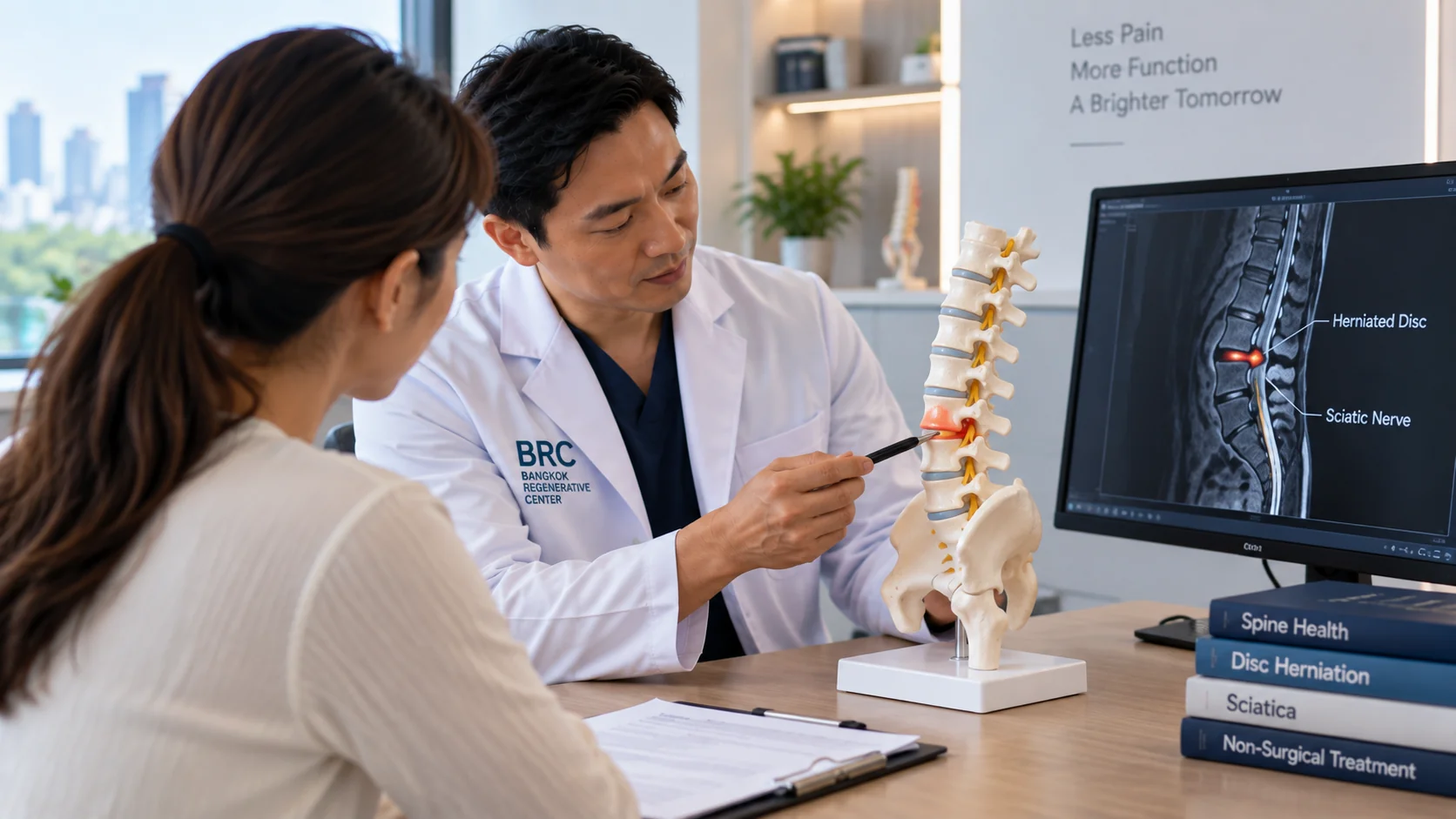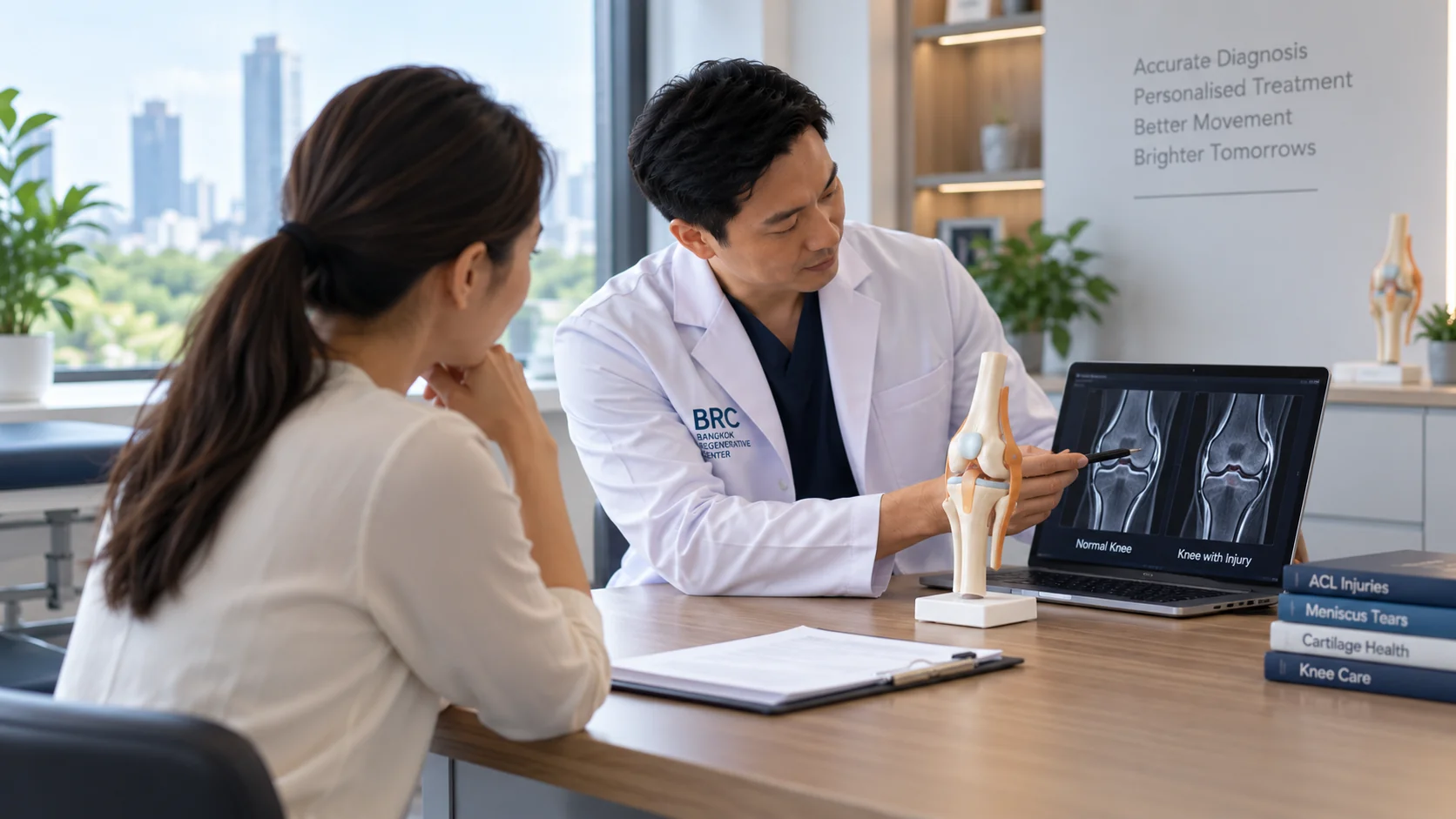


Quick answer: The large majority of back pain is managed without surgery. Between basic rest and an operation sits a substantial middle ground — precise diagnosis, image-guided procedures, tissue-directed therapies and structured rehabilitation — that many people are never walked through.
The Decision Landscape
- First-line: Graded activity, pain control and physical therapy — typically during the first 6–12 weeks.
- Middle ground: Precise diagnosis, image-guided procedures, tissue-directed therapy and structured rehabilitation when symptoms persist.
- Surgical: Procedures such as decompression, fusion or disc surgery when there is a defined indication.
Why Surgery Is Not the Default
Two facts explain why surgery is not usually the first step for back pain.
Most Disc Herniations Improve Without an Operation
Displaced disc material can gradually be reabsorbed over time, which is why conservative management is commonly the starting point when no red flags are present.
Imaging Findings Alone Do Not Justify Surgery
Degenerative changes are common even in people with no symptoms. Research has found spinal degeneration in 37% of asymptomatic 20-year-olds and 96% of asymptomatic 80-year-olds.
This is why the question “Do I need surgery?” cannot be answered from an MRI report alone. The scan finding has to match the actual structure generating the symptoms.
Step One: Naming the Actual Problem
“Lower back pain” describes a location. It is not a diagnosis, and treatment aimed at the wrong structure will not work regardless of how well it is delivered.
Back pain may originate from the disc, facet joints, sacroiliac joint, a nerve root, muscles and ligaments, or may even be referred from the hip.
- Pain worse when leaning back or standing may point in one direction
- Pain worse when bending forward or sitting may point in another
- Pain travelling below the knee with numbness or weakness suggests nerve root involvement
- Pain that improves when leaning forward may raise the possibility of spinal stenosis
- Morning stiffness lasting more than an hour may require a different line of investigation
A hands-on examination then looks at posture, tenderness, range of motion, neurological signs and how load moves through the spine.
Imaging should follow to answer a defined question rather than be used automatically as the first step. In selected cases, a targeted diagnostic injection can help confirm which structure is actually responsible.
Where First-Line Care Reaches Its Limit
The usual sequence is medication, physical therapy and sometimes corticosteroid injections. Each has a legitimate role.
Medication can make movement possible during a flare. Physical therapy addresses mechanical contributors that an injection cannot fix. Corticosteroids can reduce inflammation enough for rehabilitation to progress.
What these approaches do not necessarily change is the underlying condition of the disc, ligament or joint surface.
A useful pattern to notice: If each injection provides relief for a shorter period than the one before, that is information. It may mean the symptom is being suppressed while the underlying problem continues.
What the Middle Ground Involves
Image-Guided Precision Procedures
Ultrasound and fluoroscopic guidance allow the needle to be visualised in real time, placed accurately within the intended target and guided away from nearby nerves and blood vessels. In the spine, accurate placement can be particularly important.
Tissue-Directed Therapies
Growth factor preparations derived from the patient’s own blood may be considered with the aim of supporting the local tissue environment and modulating inflammation, particularly in selected ligament, tendon and facet-related problems. Cell-based therapy using bone marrow may also be considered for selected presentations, although research continues and individual responses vary.
Prolotherapy and Perineural Approaches
These approaches may be considered where ligament laxity or nerve irritation contributes to the symptom pattern.
Structured Rehabilitation
Rehabilitation is not an optional extra. Restoring strength and movement control in the muscles supporting the spine helps determine whether improvement lasts. If the loading pattern that contributed to the problem remains unchanged, symptoms may return.
How Physicians Decide Between These Options
Several factors shape which approach may be appropriate:
- Which structure is involved — disc, facet, nerve root and sacroiliac problems respond differently
- How long symptoms have been present — and whether they are improving, stable or worsening
- What has already been tried — including how each treatment performed
- Neurological findings — weakness or progressive numbness changes the decision
- Your functional goals — such as sleeping comfortably, sitting through a meal or walking further
- Overall health and current medications
What Improvement Realistically Looks Like
Improvement is usually measured in weeks to months rather than days.
Many people notice functional improvements before their overall pain score changes — for example, sleeping through the night, sitting more comfortably or walking further before needing to stop.
Some experience substantial and durable improvement. Others improve partially. Some do not respond sufficiently and proceed to surgical consultation after the non-surgical options have been properly explored. Individual results vary.
When Surgery Is the Right Answer
Some situations call for prompt surgical assessment rather than continued conservative care.
- Progressive weakness in the leg or foot
- Cauda equina syndrome — loss of bladder or bowel control, or saddle numbness
- Severe, unrelenting nerve pain that has not responded to appropriate conservative treatment
- Significant spinal instability or fracture
- Infection or tumour
Frequently Asked Questions
How long should I try non-surgical treatment before considering surgery?
In the absence of red flags, conservative management is typically given at least 6–12 weeks and often longer. The more important question is whether the treatment attempted was actually targeted at the right structure.
Do I need surgery for a herniated disc?
Usually not. Many herniations improve as the displaced material is gradually reabsorbed. Surgery is more clearly indicated for progressive neurological deficit, cauda equina syndrome or severe nerve pain that does not respond to appropriate treatment.
Will my back pain come back after non-surgical treatment?
Recurrence is possible with both surgical and non-surgical approaches. Restoring strength and movement control in the muscles supporting the spine is an important part of reducing recurrence risk.
Is spinal fusion the only option for degenerative disc disease?
No. Degenerative changes are very common and may be present without symptoms. Management depends on whether those changes are actually responsible for the pain and how they are affecting function.
Can I avoid surgery if I already have nerve symptoms?
Sometimes. Mild or stable numbness and tingling may still be managed conservatively. Progressive weakness is different and warrants prompt assessment.